
Reviewed by: Pawswired Editorial Team | Last Updated: May 21, 2026
You invited friends over for dinner. You spent two hours cleaning the house, lighting candles, and wiping down counters. But the moment they walk through the front door, you see that micro-expression on their faces. The slight crinkle of the nose. Your house smells like cat poop.
The most frustrating part? You just dropped $250 on a “smart” automatic litter box that promised to eliminate smells entirely.
If you are struggling to find effective self cleaning litter box odor control, you are running into a massive engineering lie. Most brands design the mechanics to scoop the waste, but treat odor isolation as a complete afterthought. They rely on cheap perfumes or, dangerously, toxic chemical generators to mask the smell.
The Ozone and UV Scam
I’ve audited PCBA boards for pet tech in Shenzhen. To cut costs on expensive rubber seals, budget brands embed a $1.20 Ozone (O3) generator or UV-C LED into the waste drawer. They market this as “medical-grade sterilization.” What they don’t tell you: the EPA explicitly warns that ozone causes severe respiratory damage. Cats have tiny lungs. Bombarding their bathroom with toxic ozone gas or unshielded UV light to save $15 on hardware costs is negligent engineering.
I test hardware integrity, not marketing claims. Today, we are tearing down the waste drawers, carbon filters, and sealing mechanisms of the top models to see who actually engineered a stink-free solution.
⚡ TL;DR: The Only Odor-Proof Picks
True odor control requires mechanical sealing and negative air pressure, not cheap sprays. Here are the hardware-validated exceptions.
Litter-Robot 4
The gold standard. Features a carbon-filtered negative pressure drawer and heavy-duty silicone seals. Absolutely zero ozone generators.
Neakasa M1
The best open-top design. Uses a mechanical “Pull and Seal” trash bag mechanism that locks away odors instantly without chemical sprays.
What’s in this Teardown:
Part 1: The Physics of Odor Isolation
To understand why your current litter box stinks, we have to look at fluid dynamics. Cat urine contains massive amounts of urea, which bacteria break down into ammonia gas. Ammonia is highly volatile and lighter than air.
When a cheap automatic litter box drops a clump into the waste drawer, it displaces the air inside that drawer. If the drawer isn’t hermetically sealed, that ammonia-rich air is forced out through the panel gaps and straight into your living room.
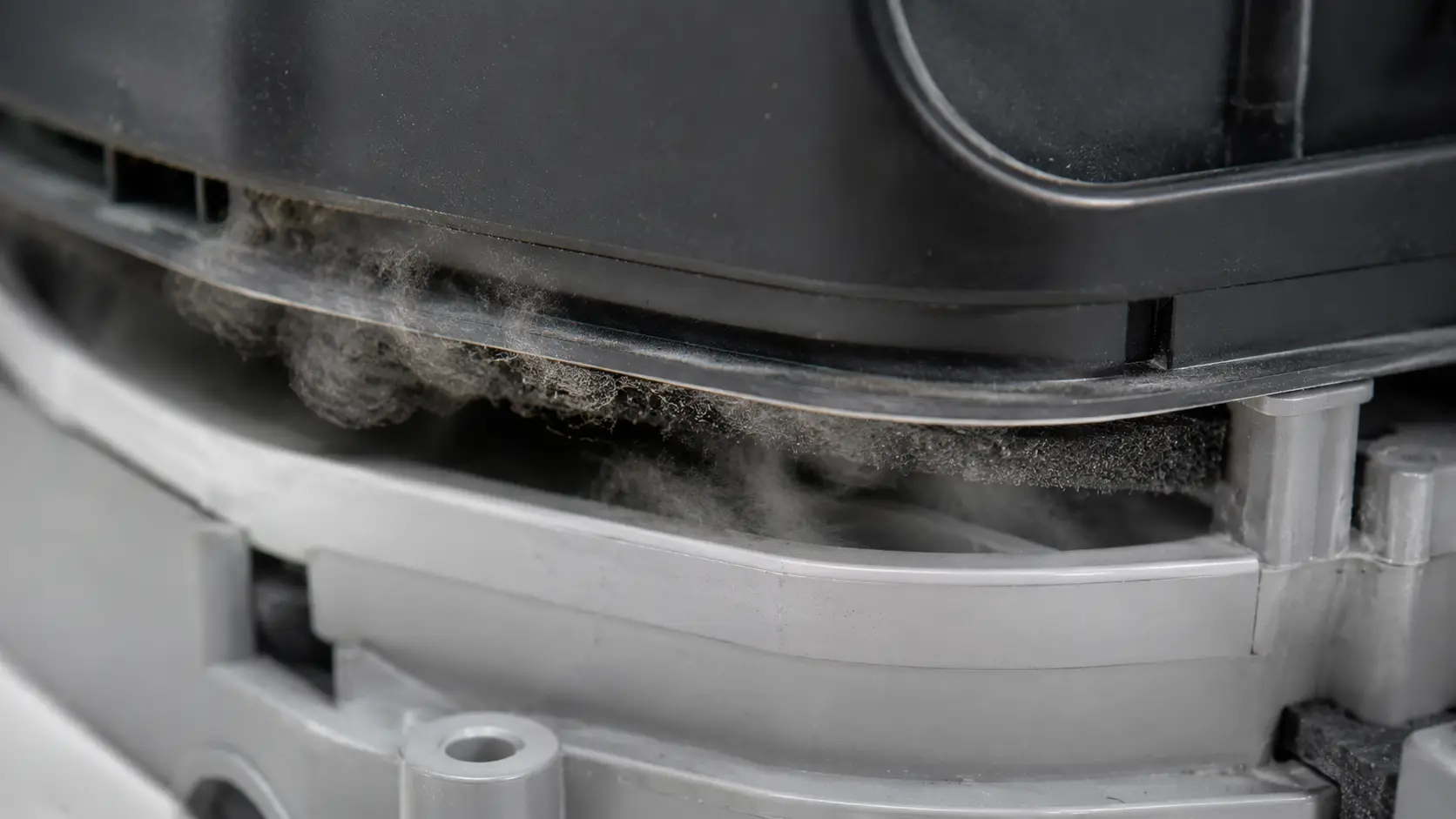
Mastering self cleaning litter box odor control requires two specific engineering features that budget brands refuse to pay for:
-
High-Density Silicone Gaskets: Foam strips degrade in 30 days due to ammonia exposure. Real odor isolation requires automotive-grade silicone seals around the entire waste bin perimeter. -
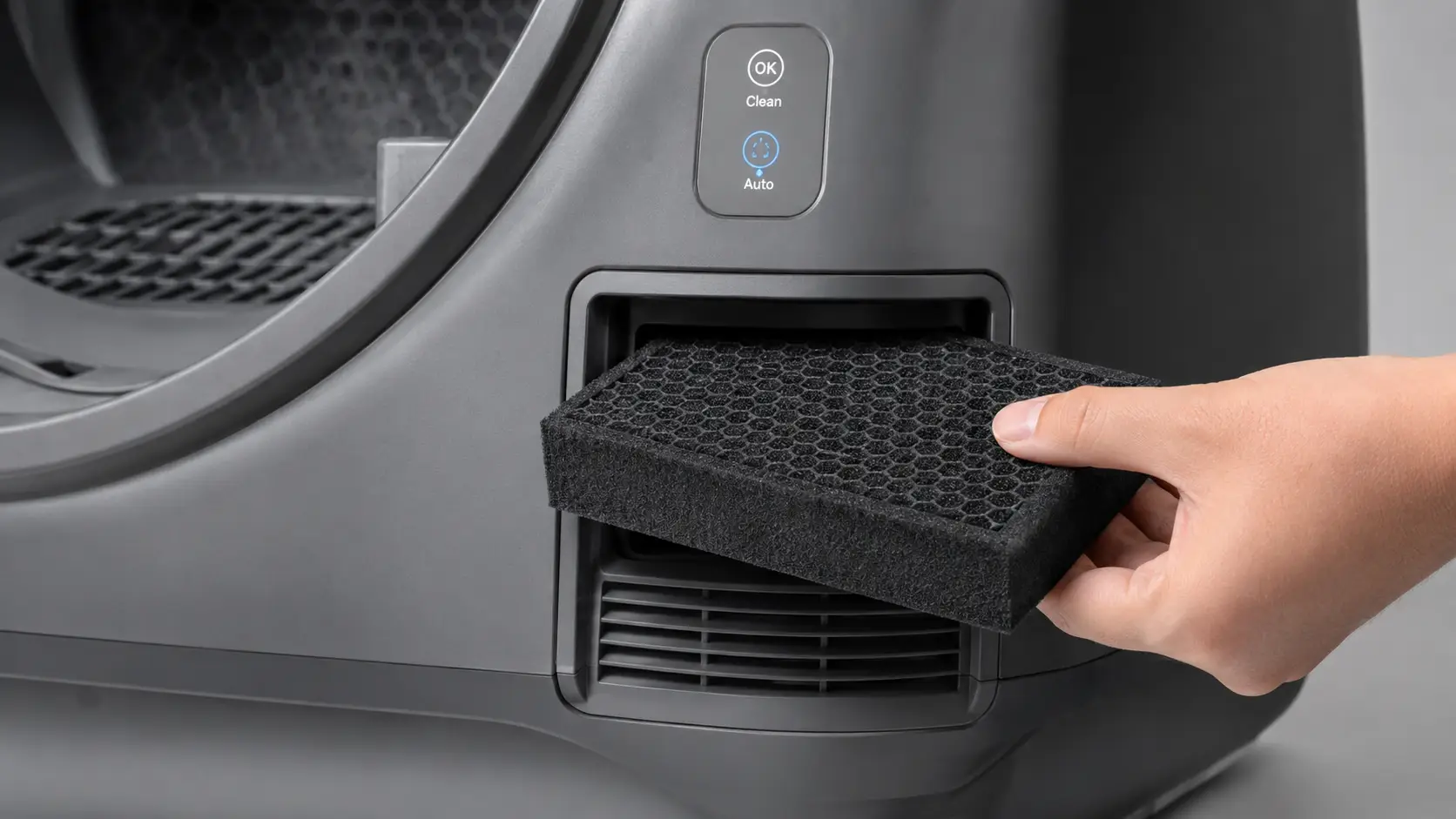
Negative Air Pressure & Carbon Traps: The drawer must funnel escaping air through an activated carbon matrix, absorbing the volatile organic compounds (VOCs) before they reach your nose.
Part 2: Head-to-Head Comparison Matrix
Let’s look at how the top contenders handle their stink management. No marketing buzzwords, just the actual mechanical implementations.
| Odor Feature | Litter-Robot 4 | Neakasa M1 | Generic Amazon Units |
|---|---|---|---|
| Waste Bin Seal | Silicone Gasket | Trash Bag Cinch System | Cheap Foam Strips |
| Active Filtration | Carbon Filter / OdorTrap | Passive sealing | Toxic Ozone / UV |
| Deodorizer Cost | ~$15 for 6 Carbon Filters | $0 (Uses standard bags) | Fake scent blocks |
| Overall Smell Factor | Virtually Zero | Very Low | Terrible |
Part 3: Deep Teardown of the Top Models
We aren’t just looking at the apps. I disassembled the chassis of these units to see how the manufacturers actually route the air.
Litter-Robot 4
The Heavy-Duty Carbon Fortress
Whisker completely redesigned the waste drawer for the LR4 compared to the LR3. When I inspected the lip of the waste drawer, I found thick, continuous silicone gaskets. When the drawer is closed, it forms a mechanical seal against the main chassis.
But the true genius is the exhaust routing. Air escaping the waste drawer is forced through a large, dense carbon filter block. They also sell “OdorTrap” pods (which use plant-based oils to neutralize odor molecules, not just mask them). The result? Even standing directly next to the machine, you cannot smell it.
Neakasa M1
The “Pull and Seal” Innovator
The Neakasa M1 takes a radically different approach. It’s an open-top box (which cats love because it doesn’t feel like a trap). Because it’s open, you’d think it would smell terrible. But it doesn’t.
During the cleaning cycle, the waste is pulled into a bottom bin. To empty it, you don’t expose the waste to the air. You pull a drawstring, and the trash bag physically cinches closed before you ever open the drawer. It traps the stink in the plastic bag mechanically. No filters needed. No chemical sprays.
Related Teardown: Odor isn’t the only issue with cheap boxes. Read our deep-dive on automatic litter box anti-pinch sensors to see why budget weight sensors can be dangerous for small cats.
Part 4: Physical Seals vs. Chemical Sprays
Many brands rely on “Smart Sprays” that shoot deodorant onto the poop after a cycle. While this masks the smell, I prefer physical isolation. Here is the breakdown.
Mechanical Sealing (LR4 / M1)
- Stops odor at the source, preventing escape.
- No unnatural perfumes to irritate your cat’s nose.
- Does not require buying $15 liquid refill bottles every month.
Chemical Sprays
- Merely mixes floral scent with poop scent.
- Cats have 40x more olfactory receptors than humans; strong perfumes cause litter box aversion.
- The sprayer nozzle frequently clogs with dust.
Frequently Asked Questions
Do self-cleaning litter boxes smell worse over time?
If you buy a cheap unit with porous plastics, yes. Micro-scratches from the cat’s claws hold onto bacteria. Premium units like the LR4 use high-grade liners that resist scratching. Regardless of brand, you still need to deep clean the globe every 1-2 months.
Can I use regular trash bags in the LR4 or M1?
Yes! The LR4 takes standard 10-13 gallon kitchen trash bags perfectly fine. You don’t have to buy their proprietary branded bags. The Neakasa M1 also works with standard generic bags, drastically lowering your long-term running costs.
Is UV sterilization safe for cats?
No. UV-C light degrades plastic over time, making it brittle. More importantly, if the software glitches and the UV light turns on while the cat is inside, it can cause severe corneal damage. Avoid litter boxes with internal UV lights.
Final Verdict: Engineering Wins
Achieving perfect self cleaning litter box odor control is not about adding more electronics. It’s about fundamental fluid dynamics and airtight mechanical seals.
The cheap $150 units on Amazon fail because foam degrades, gaps leak, and ozone generators literally poison the air. You cannot shortcut physics.
Buy the Neakasa M1 if you want a reliable open-top design.
Buy the Litter-Robot 4 if you want the absolute fortress of odor control. Don’t waste money on toxic gimmicks.

Hi, I’m Lewis Lee.
I spent over 10 years in Shenzhen sourcing PCBA modules, testing antennas, and auditing electronics factories. I started PawsWired to cut through the marketing fluff and bring real, component-level teardowns to the pet tech industry. If a product cuts corners on safety, I’ll show you exactly where.