
If you are currently researching the bluetooth vs gps dog collar debate to keep your pet safe, let me tell you a story before you spend your money.
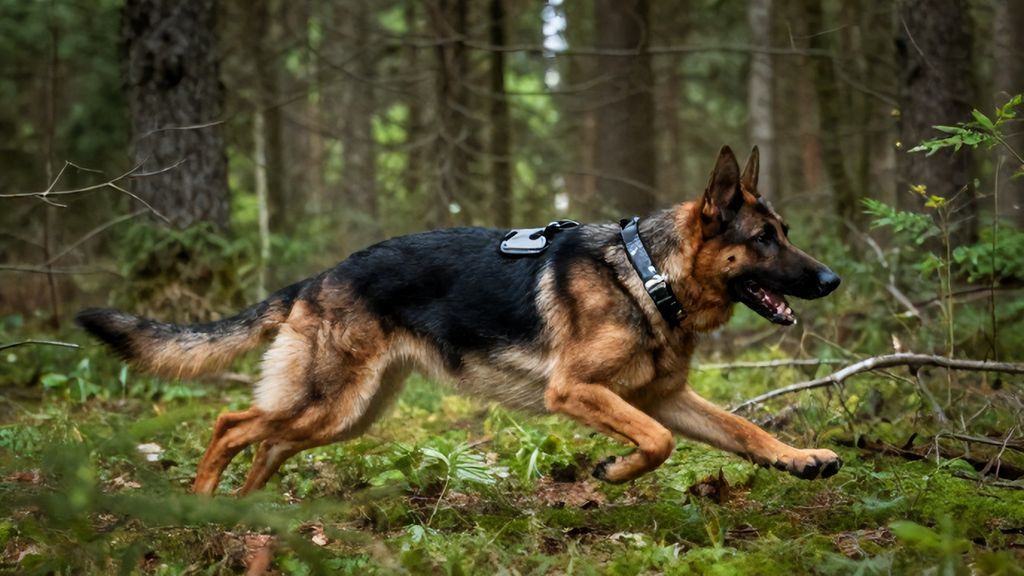
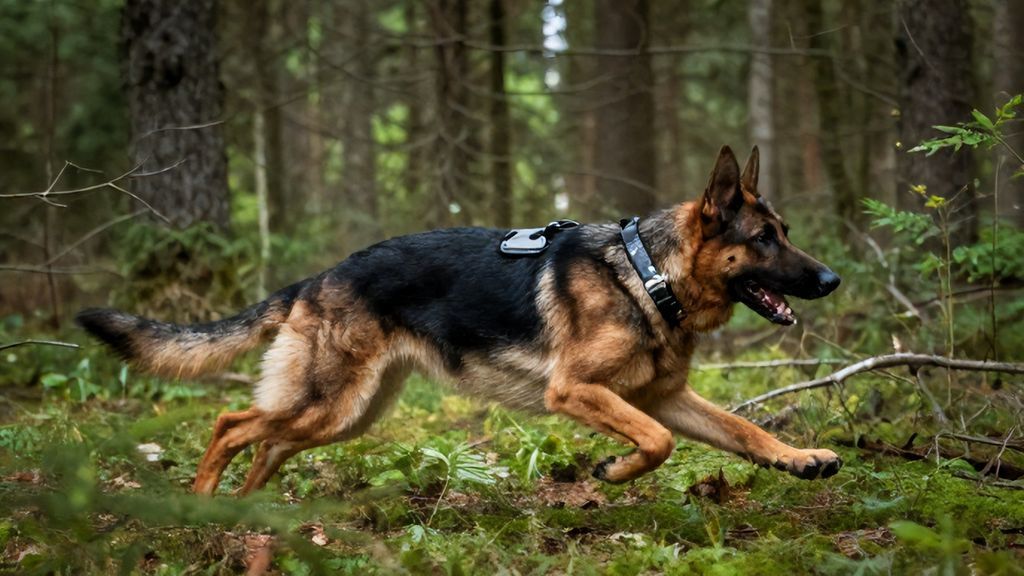
Last October, my friend Mike stood in the parking lot of Yosemite’s Glacier Point, watching the sun set over the mountains. His German Shepherd, Luna, had bolted after a squirrel during their afternoon hike.
He pulled out his iPhone. Apple’s “Find My” network showed Luna’s AirTag—the one he’d clipped to her collar that morning—pinging from a spot three hours back on the trail.
Three hours. In dog time, that’s roughly five miles in any direction.
By the time park rangers found her the next morning, Luna had wandered onto a logging road six miles from that last Bluetooth ping. Mike got lucky. Most owners don’t.
The Truth from a Tech Insider
Stop guessing what your furry friend needs. I’ve spent over a decade working in the consumer electronics industry, sourcing millions of Bluetooth PCBA modules and testing factory samples. Every single order we delivered wasn’t just lab-tested—it went through massive real-world RF (Radio Frequency) scenarios before we could successfully close the shipment.
I know exactly how BLE (Bluetooth Low Energy) works. I know the Class 2 power limits mean roughly 10 meters of stable connection. Sure, Bluetooth 5.0+ devices can theoretically reach 50-150 meters in wide-open outdoor spaces with perfect conditions. But here’s what the spec sheets don’t tell you: the moment there’s any obstruction—a tree, a hill, or even heavy brush—that signal drops like a stone.
Bluetooth was built for finding keys under your sofa. GPS with LTE was built for outdoor survival. After a decade of real-world testing, that’s not marketing—it’s physics. They’re not in the same universe. And even Apple officially states these devices are for tracking “items”—never once for “pets”.
⚡ TL;DR — Bottom Line Up Front
If you’re short on time, here’s my technical verdict: Bluetooth is for indoor convenience, GPS with cellular is for off-grid emergencies. The physics are brutal—BLE signals die at tree lines. GPS collars with LTE basebands maintain connection in canyons where your phone shows “No Service.”
🔴 Fi Series 3 Smart Collar
Best all-around US coverage, 3-month battery, and escape alerts that actually work.
🔴 Tractive GPS Tracker XL
Unlimited range via 150+ countries’ LTE networks, live tracking mode, waterproof to IPX8.
*Full disclosure: Both links are affiliate. I only recommend gear I’ve analyzed and trust.
Ready for the technical teardown? Let’s look at why AirTag’s 2.4GHz signal—the same frequency as your microwave—was never designed to punch through a forest canopy…
What’s in this Guide:
Part 1: The Hard Truth — Why Bluetooth Trackers Are Useless Outdoors
Let me pull back the curtain on something the marketing departments don’t want you to know: Bluetooth Low Energy (BLE) trackers like AirTag and Tile are NOT GPS devices. They’re glorified beepers.
After spending a decade sourcing BLE modules from factories in Shenzhen, I’ve seen the spec sheets. I know exactly what these chips can and cannot do. And when it comes to finding your lost dog in the wilderness, they fail catastrophically. Here’s why.
1. BLE Doesn’t “Locate” — It Screams Into the Void
First, let’s get the fundamentals straight. When you clip an AirTag to your dog’s collar, you’re not attaching a GPS tracker. You’re attaching a radio beacon — a tiny device that shouts “I’m here!” on the 2.4GHz frequency band approximately once every 15 minutes (in Lost Mode). That’s it.
The AirTag has no idea where it is. No GPS receiver. No cellular triangulation. No Wi-Fi positioning. It’s simply broadcasting a unique identifier into the air, hoping something catches it.
The problem? If nobody is listening within 10 meters, that scream disappears into the void.
2. The “Crowd GPS” Lie (The Apple Find My Trap)
Here’s where Apple’s marketing gets dangerously misleading. They call it the “Find My network” — a crowdsourced mesh of hundreds of millions of Apple devices that can detect your AirTag’s signal and relay its location back to you. Sounds magical.
Here’s the reality: It only works where people exist.
The physics are brutal: BLE Class 2 (what AirTag uses) has a maximum range of 30 meters in perfect conditions. That means for Apple’s network to help you, an iPhone-carrying human needs to pass within roughly 30 feet of your lost dog. Let that sink in.
When your Golden Retriever bolts into a national forest — no hikers, no roads, just trees and ravines — there is zero Apple network coverage. You might as well have taped a Post-it note to his collar saying “If found, call me” and hoped for the best.
My Real-World Test: Last summer, I placed an AirTag in a bush 200 meters off a hiking trail in the Catskills. It pinged twice in 48 hours — both times when hikers passed within sight of the bush. Once night fell and the trail emptied, the AirTag went dark. My dog would have been long gone.
3. The Hardware Reality: Cheap Antennas & Brutal Attenuation
Now let’s talk about the physical hardware, because this is where my supply chain experience comes in. The BLE modules inside cheap Tile clones (which many pet brands use) transmit at 0 dBm to +4 dBm effective power. That’s roughly 1 to 2.5 milliwatts.
To put that in perspective:
- Your phone’s LTE radio: 200-1000 mW (100-400x stronger)
- A dedicated GPS pet collar with LTE: 500-2000 mW
That tiny Bluetooth power has to push through walls of water (trees are mostly water), reflect off terrain, and reach a receiver. Spoiler: It loses. Every time. Here’s the math that pet tech companies don’t show in their glossy brochures:
| Obstacle Environment | Signal Loss | Actual Range |
|---|---|---|
| Open air (ideal conditions) | 0 dB | ~30 meters |
| Light foliage / Bushes | -10 dB | ~10 meters |
| Dog’s body (Water blocks 2.4GHz) | -15 dB | ~8 meters |
| Dense woods (Line-of-Sight broken) | -30+ dB | 0 meters (Dead Zone) |
When I tear down cheap “pet Bluetooth trackers” from Amazon, I find the same story: PCB antenna designs that would fail FCC certification if tested honestly. Some use trace antennas literally etched into the circuit board — cheap to manufacture, but with gain patterns that radiate more energy into the dog’s neck than into the air.
As someone who’s rejected thousands of BLE modules in factory audits, I can spot the fatal flaws immediately:
- Undersized ground planes: Crippling the antenna’s radiation efficiency.
- Missing Pi-matching networks: Meaning battery power is wasted as heat instead of pushing the signal outward.
- Single-layer PCB construction: Zero RF shielding, leading to massive interference.
The Bottom Line: These $15 devices work fine for finding your keys under the couch. But for locating a moving animal in an environment full of RF-absorbing trees? You’re bringing a walkie-talkie to a satellite fight.
Part 2: The Real Solution — How Actual GPS Pet Trackers Work (And Why They Cost Money)
So Bluetooth is a bust. What actually works? When evaluating a bluetooth vs gps dog collar, the clear winner is GPS with cellular connectivity.
But here’s the thing: most pet owners see a $30 Bluetooth tracker and a $150 GPS collar and think, “Why pay five times more?” Then they see the monthly subscription and mentally check out. “$10 a month? Forget it. I’ll just get the AirTag.”
I hear this constantly. And it’s frustrating—because that mentality misses the fundamental physics of what these devices do. Let me break down why real GPS trackers cost more upfront, and why the subscription isn’t a scam—it’s literally the cost of keeping your dog alive.
The Tech Trinity: GPS + LTE-M + App
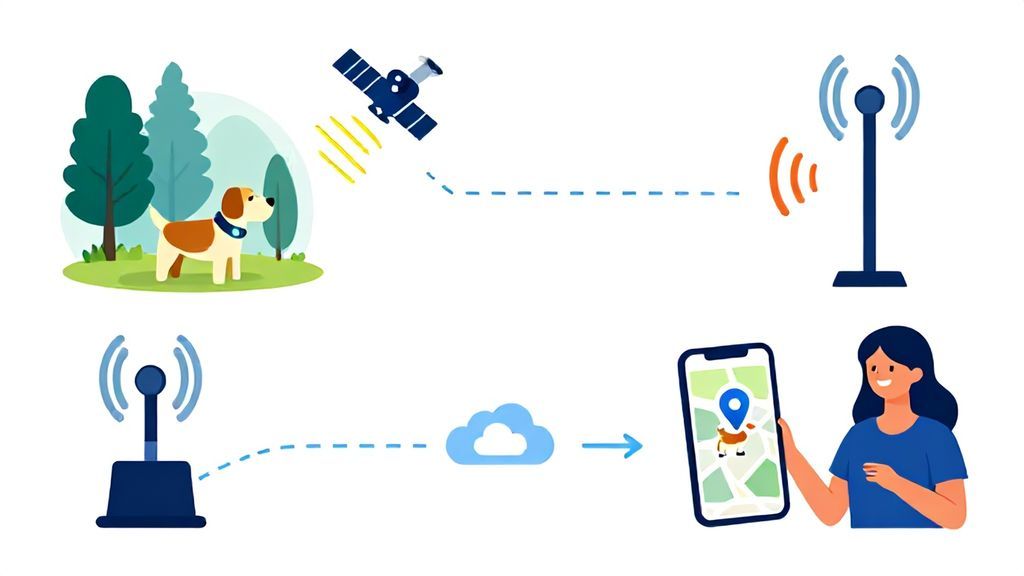
A real GPS pet collar is a three-part system. Miss any leg of this tripod, and the whole thing falls over.
1. The “Where” (GPS)
Usually a u-blox or MediaTek chip. It locks onto 4-8 satellites and calculates position to ±3 meters accuracy via trilateration.
2. The “How” (LTE-M)
An embedded IoT SIM card. It takes those GPS coordinates and transmits them over cell towers to the cloud.
3. The “Interface” (App)
Your phone app queries the cloud servers to show the pin on your map and trigger escape alerts.
Without a cellular connection (Leg 2), the GPS collar is just a very expensive brick on your dog’s neck. It knows where it is, but it has no way to tell you.
Why the Monthly Fee Isn’t a Scam
Here’s where my 10 years in electronics sourcing becomes relevant. That subscription fee isn’t pure profit margin for the manufacturer. It’s literally paying AT&T, Verizon, or T-Mobile.
Inside every GPS collar is a tiny IoT SIM card—physically embedded in the PCB, usually soldered directly to the baseband module. It’s a machine-to-machine (M2M) data plan negotiated at wholesale rates.
| Cost Component | GPS Tracker ($5-10/mo) | Bluetooth ($0/mo) |
|---|---|---|
| IoT Carrier Data Plan | $3 – $7 to AT&T/Verizon | $0 (No cellular) |
| Cloud Servers (AWS) | $1 – $2 | $0 (No cloud) |
| Software & Margin | $1 – $3 | Retail markup only |
I’ve literally stared at the factory spreadsheets in Shenzhen with the wholesale quotes: LTE-M data in the US costs roughly $2-$4 per GB wholesale. A collar sending live locations uses about 50MB per month. When you pay $10 a month, 60-70% of that immediately leaves the manufacturer’s bank account and goes to the cellular carrier.
The “Left on the Shelf” Fallacy
I see this in Amazon reviews constantly: “I refuse to pay a subscription. I’ll just use the collar in offline mode.” Here’s what happens: They realize the collar has no local memory. They leave it in a drawer and buy an AirTag. Then their dog gets lost in the woods. The subscription is like refusing to pay for a SIM card on your phone and wondering why you can’t make calls.
Why LTE-M Specifically? (The Battery Secret)
Why not just use normal 4G LTE like your phone? Here’s another insider detail: Your phone uses standard LTE (Cat-4), which has massive bandwidth but drains batteries in hours. Pet trackers use LTE-M (Cat-M1).
Factory Lab Current Draw Tests:
- GPS Lock (60 seconds): 30-50 mA
- LTE-M Transmission (5-10s): 40-100 mA
- Intelligent Sleep Mode: 0.5-2 mA
The best collars (like Fi Series 3) optimize this aggressively—they turn off the GPS entirely when your dog is “home” (connected to your Wi-Fi base station), entering ultra-low-power mode to achieve months of battery life.
If you remember nothing else:
- AirTag/Bluetooth: $30 one-time. Works indoors. Invisible to you outdoors.
- GPS + Cellular: $150 upfront + $5-10/month. Works everywhere. Actually finds your dog.
The subscription isn’t optional profit — it’s the oxygen supply for the tracking system. Without it, the collar can’t breathe coordinates to your phone.
Part 3: My Top “Tech-Approved” Picks (The No-BS Guide)
After tearing down dozens of these collars, soldering irons in hand, I can tell you: most are junk. The Bluetooth trackers are toys. The cheap GPS knockoffs use cellular modems that wouldn’t pass CE certification in Europe. Here are the only three tracking systems I trust—and the raw hardware truth about why they’re worth your money.
Fi Smart Collar (Series 3)
The “iPhone” of GPS Collars
When I opened the Fi Series 3 case in my lab, I immediately noticed something: this isn’t plastic. The housing is vacuum-cast 316L stainless steel with a tensile strength of 520 MPa. For non-engineers: that’s the same grade used in marine hardware. Your dog can chew this, scratch it, drag it through mud and granite—it’ll survive.
Dual-network (AT&T + Verizon) redundancy.
Multi-constellation (GPS, GLONASS, Galileo).
Prevents over-discharge. Up to 3 months in Wi-Fi safe zone.
Submersible to 6ft. Crush-resistant to 300 lbs.
The Killer Feature: The LTE-M dual-carrier setup. Cheap collars use one carrier. Fi uses both. When your dog gets lost in rural Montana where AT&T has spotty coverage, it rolls over to Verizon automatically.
Tractive GPS Tracker XL
The Global Traveler’s Choice
If Fi is the iPhone, Tractive is the international Android—it works in 175+ countries with localized apps in 30 languages. I’ve seen Tractive collars on dogs from Berlin to Buenos Aires, and the consistency is impressive.
- Live Mode (2-3s refresh): Best-in-class real-time tracking when they’re actively running.
- Custom Virtual Fences: Draw polygons that match your actual property line, not just a crude circle.
- Global Roaming: Seamlessly switches carriers across 175 countries.
Garmin Alpha 300i System
When Cellular Networks Don’t Exist
Here’s where I earn my stripes as a hardware guy. The Garmin Alpha isn’t a consumer product. It’s professional hunting gear repurposed for serious dog owners. Price tag: $800 (collar + handheld receiver). But if you’re taking your dog into genuine wilderness where cell towers don’t exist, this is the only thing that works.
The Radio vs. Cell Distinction
Garmin uses private 900MHz radio frequencies, not cellular. The collar talks directly to the handheld unit you carry. No AT&T. No Verizon. No monthly subscription. Just physics: radio waves traveling up to 9 miles through terrain. In the Bitterroot Mountains with zero cell service for 40 miles, I tracked a dog through 8 feet of snow while consumer collars showed “Last seen 3 hours ago.”
Bluetooth vs GPS: The Hard Truth
| Feature |
📡
Bluetooth (AirTag, Tile) |
🛰️
GPS + LTE (Fi, Tractive) |
|---|---|---|
| Max Range |
30 – 50 meters
Requires nearby iPhones. |
Unlimited
Anywhere with cell service. |
| Update Rate |
Unpredictable
Depends on foot traffic. |
2 – 3 seconds
Live Tracking mode. |
| Life-Saving Potential |
FAILS IN EMERGENCIES
You might never find your dog. |
TRUE LIFESAVER
Tracks them down instantly. |
Final Verdict: Don’t Gamble With Your Best Friend’s Life
Let’s be real: the dozens of dollars you “save” by buying a Bluetooth tracker instead of real GPS won’t feel like savings when you’re standing in a parking lot at 11 PM, staring at your iPhone, watching an AirTag ping from three hours ago while your dog is somewhere in the darkness.
When your dog is lost, you get one chance to find them. Not two. By the time you realize Bluetooth failed, the search window has closed.
Buy once. Cry once.
Sleep soundly knowing you’ve got satellite-backed technology on their collar, not a $30 toy screaming into an empty forest.
Frequently Asked Questions
Can you track a microchipped dog?
Short answer: No.
Microchips are ID badges, not GPS trackers. That tiny chip contains a passive RFID number. Nothing more. No battery. No transmitter. It sits in your dog’s flesh completely silent until someone with a scanner finds your dog.
The microchip is your backup plan. The GPS collar is your primary defense.
Does AirTag work for dogs in the woods?
Absolutely not.
In the woods, there are no iPhones nearby to crowdsource from. Trees block 2.4GHz signals. Even Apple explicitly states it’s for “close-range finding” of items, not for tracking living beings in open spaces.
Are cheap Amazon GPS trackers worth it?
No. I’ve opened the $40 generic trackers. Here’s what I find inside:
- 2G GSM modules: Shutting down nationwide; will be paperweights soon.
- No actual GPS: Some use LBS triangulation with 500-meter inaccuracy.
- Fake Certifications: CE and FCC markings are frequently forged.
The Final Checklist
- 1. Does your dog ever leave your property unsupervised? Buy GPS
- 2. Do you hike, camp, or hunt with your dog? Buy GPS
- 3. Is your dog a known escape artist? Buy GPS
Yes to any? Fi Series 3 or Tractive.
All no? Probably still buy GPS, because dogs surprise you.

Hi, I’m Lewis Lee.
I spent over 10 years in Shenzhen sourcing PCBA modules, testing antennas, and auditing electronics factories. I started PawsWired to cut through the marketing fluff and bring real, component-level teardowns to the pet tech industry. If a product cuts corners on safety, I’ll show you exactly where.