
It’s 2 AM. You’re half-asleep, shuffling to the kitchen for a glass of water. On the way, you pass your cat’s bowl—empty. Again. You fill it, watch your cat sniff it, then walk away. Same battle, every night.
If this sounds familiar, you are probably researching is a pet water fountain worth it. You’ve seen the Amazon ads: “Encourages hydration!” “Whisper quiet!” “BPA-free!” But behind the marketing, the pet water fountain industry is hiding some uncomfortable truths.
The Hardware Truth from an Insider
I’ve torn apart dozens of pet water fountains on factory floors in Shenzhen. Here’s what most reviews won’t tell you: a $25 Amazon bestseller and a $100 “premium” fountain often use the same $1.50 water pump. The real question isn’t whether a fountain looks good—it’s whether your cat will actually use it, and whether you’ll stick to the cleaning schedule it demands.
By the end of this guide, you’ll know exactly what separates a fountain that improves your pet’s health from one that just becomes another cleaning chore.
⚡ TL;DR: The Bottom Line
Most pet water fountains are not worth it for average pet owners. They require weekly cleaning, monthly filter replacements, and careful maintenance. But for pets with specific health needs—or households where hydration really matters—they can make a real difference.
Here’s who should (and shouldn’t) buy one:
- Get one if: Your pet has urinary health issues, you clean weekly anyway, or you want to track which pet is drinking how much.
- Skip it if: You want a “set it and forget it” solution, your budget is under $30, or your pet is noise-sensitive.
Petlibro Dockstream (Wireless Pump)
The Reliable Workhorse (~$65)
The Dockstream solves the biggest safety and hygiene flaw in pet fountains: wires sitting in drinking water. It uses a magnetic induction base. The tank itself has zero electronic components inside it, meaning you can detach the whole bucket and throw it in the sink without worrying about ruining a circuit board.
- True <30dB Noise: The ceramic pump shaft makes this genuinely whisper-quiet.
- Stainless Steel Tray: Prevents feline acne and bacterial biofilm.
- Wireless Pump: No wires in the water bowl—safer for pets.
Uahpet Zero Wireless Fountain
The Ultimate Cordless Option (~$80)
Uses thermal radar to detect your cat and only runs water when they approach. Battery lasts up to 120 days. Perfect for households without convenient outlets near the pet feeding area.
- Radar Motion Sensor: Only activates when pet approaches—saves energy.
- 120-Day Battery: Rechargeable lithium battery lasts months.
- 100% Wireless: Place anywhere—no cords, no outlets.
What’s in this Guide:
Part 1: How Pet Fountains Actually Work
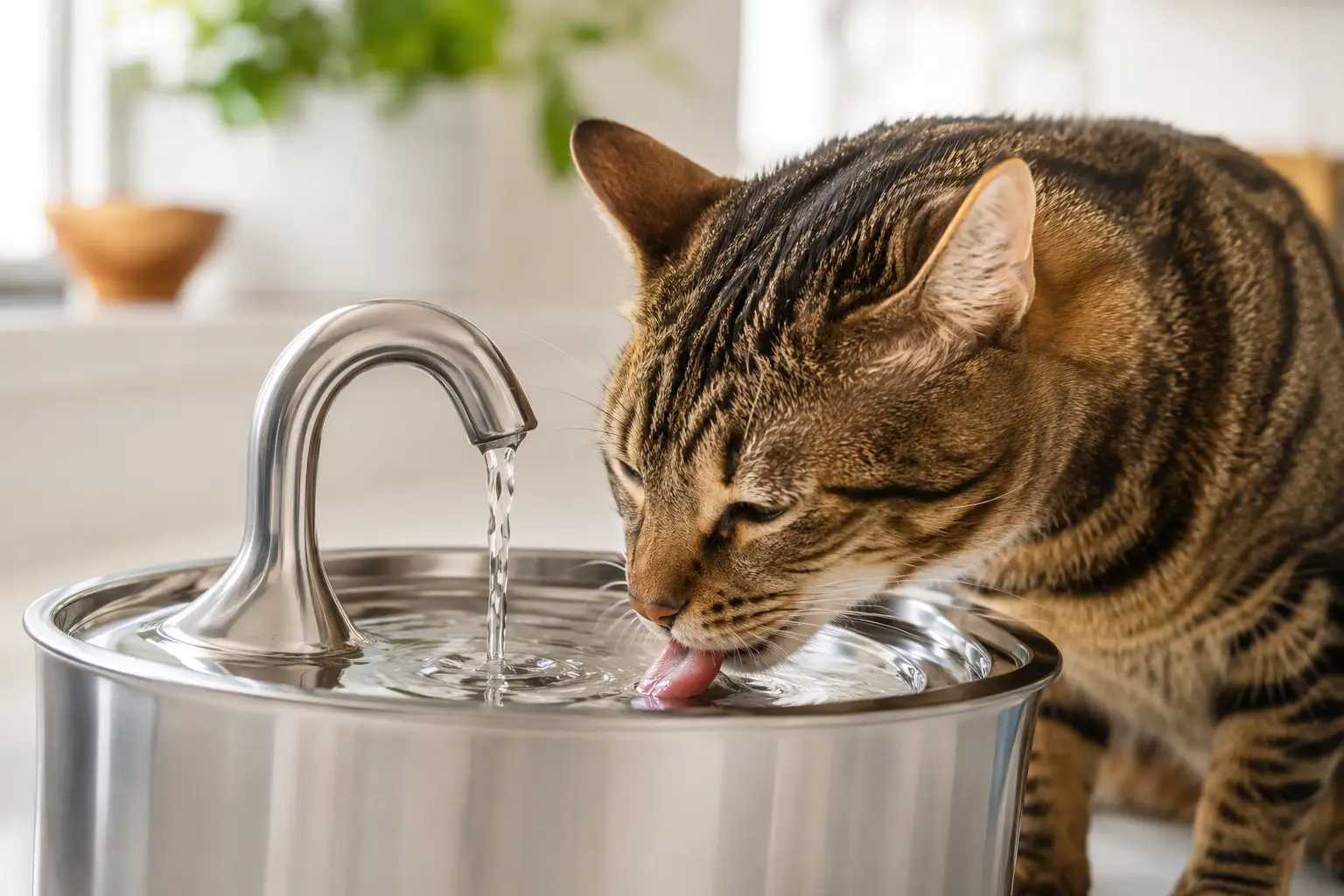
Here’s the thing: cats and dogs evolved to prefer running water. In the wild, still water often means stagnant, potentially dangerous water. That’s why your cat taps the side of the bowl with her paw before drinking—or ignores it entirely in favor of the dripping faucet.
Pet water fountains replicate this instinct. The circulating pump keeps water moving, which:
- Increases oxygenation — fresh-tasting water encourages pets to drink more
- Filters impurities — most models include charcoal filters that remove chlorine and particles
- Prevents debris buildup — circulating water is less likely to accumulate dust and hair
Studies show cats with fountains drink about 50ml more water per day than those with static bowls. For cats prone to urinary issues, that extra hydration matters. According to AVMA, proper hydration is essential for kidney health in cats.
The Hardware Reality
Don’t let the sleek exterior fool you. Every pet fountain is built around the same core components:
| Component | Budget Model ($20-35) | Premium Model ($60+) |
|---|---|---|
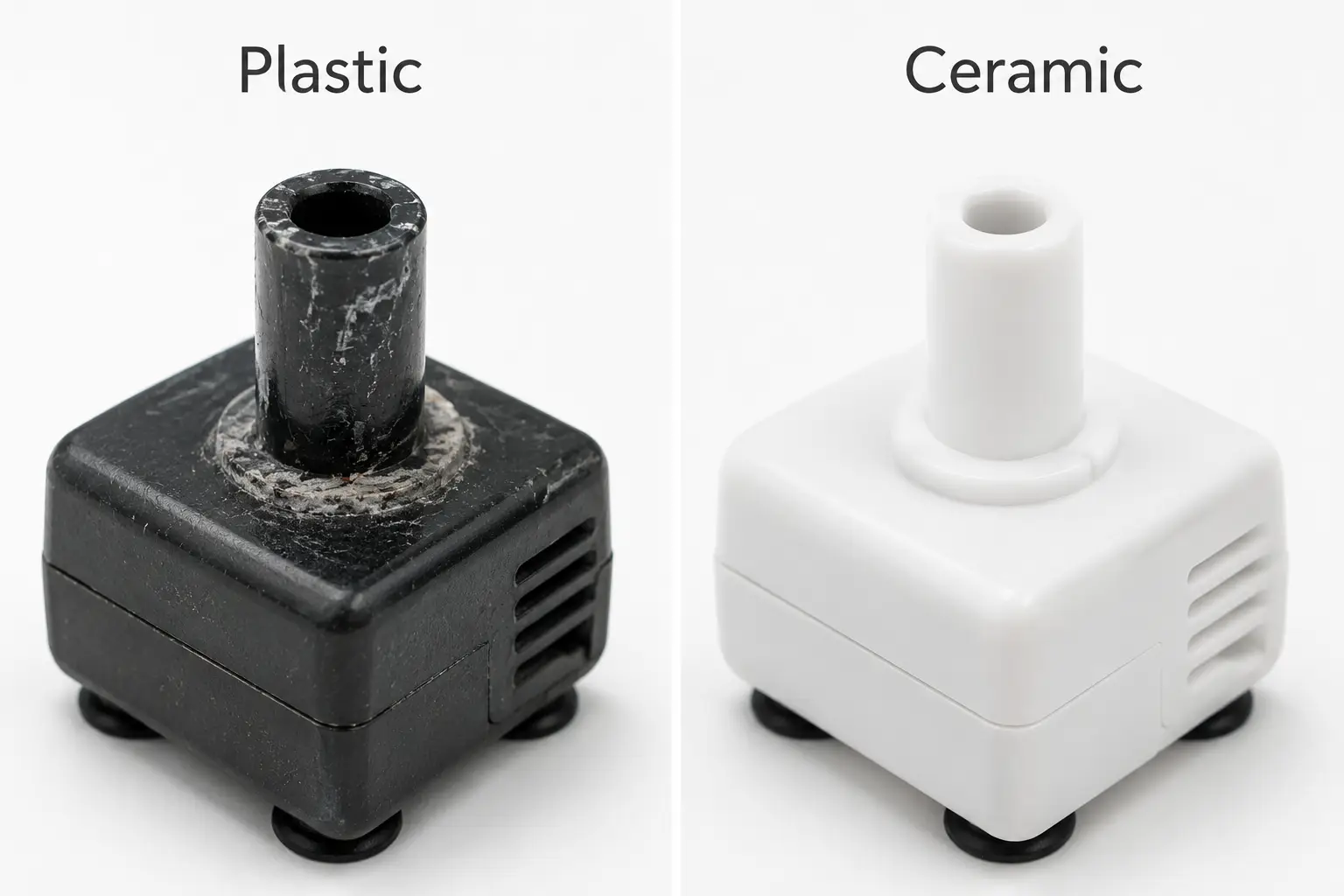
| Water Pump | Plastic shaft (6-12 month lifespan) | Ceramic shaft (2-3 year lifespan) |
| Body Material | Porous plastic (harbors bacteria) | 304 Stainless Steel or Tritan |
| Pump Wiring | Exposed wire sits in drinking water | Wireless magnetic induction pump |
| Noise Level | 35-50dB (noticeable hum) | <30dB (whisper-quiet) |
The pump is the weak point. Cheap plastic shafts wear down within a year, often grinding against the housing until they seize. Premium ceramic pumps cost manufacturers just $3-5 more in parts, but they last 3-4x longer and run whisper-quiet.
Looking for other pet hygiene tech? We review automatic litter boxes, self-cleaning bowls, and more.
Part 2: What Actually Goes Wrong
I scraped thousands of 1-star reviews across Amazon and Reddit. Here’s what actually goes wrong, and how to avoid it:
1. Pump Noise (35% of complaints)
The Complaint: “My cat won’t go near it. The humming is like a tiny motor running 24/7.”
Here’s the dirty secret: many “quiet” fountains still produce 40dB—roughly the volume of a humming refrigerator. If your cat is noise-sensitive, they will dehydrate rather than drink from it.
The Fix: Look for models specifically rated below 30dB with isolated pump housings. Petlibro and CATLINK are known for genuinely quiet operation.
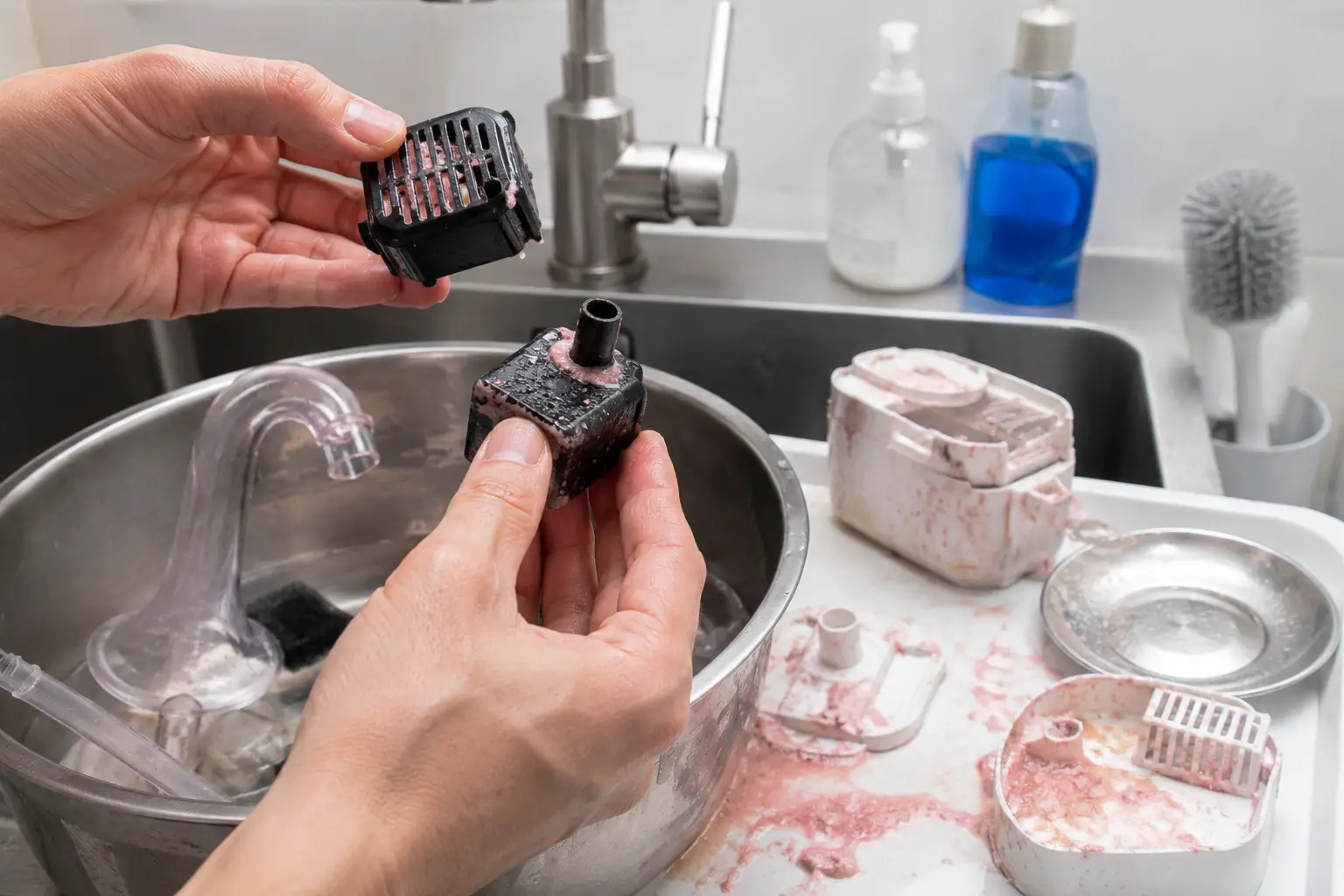
2. Bacteria & Mold (25% of complaints)
The Complaint: “Pink slime appeared after 2 weeks. The filter does nothing.”
This is the irony of water fountains: they can become dirtier than a static bowl if neglected. Warm, circulating water over cheap, porous plastic is a playground for bacteria.
The Fix: Never buy a fountain with a plastic drinking tray. Stainless steel or ceramic are the only non-porous materials that prevent biofilm buildup.
3. Pump Failure (20% of complaints)
The Complaint: “Stopped working after 8 months. Happened right after the warranty expired.”
Cheap pumps die young. It’s not a matter of if—it’s when.
The Fix: Budget for replacement filters (~$10-15 for a 3-pack) AND budget for potential pump replacement within 12-18 months if buying cheap. Or just buy quality upfront.
Part 3: Who Should (and Shouldn’t) Buy One
Based on hardware analysis and real user feedback, here’s my honest assessment:
Get One If:
- Your pet drinks very little and has urinary health risks
- You’re willing to clean it weekly and replace filters monthly
- You want to track which pet is drinking how much (multi-pet homes)
- You can afford a $60+ stainless steel model
Skip It If:
- You’re looking for a “set it and forget it” solution
- Your budget is under $25 (you’ll replace it in a year)
- Your pet is noise-sensitive and won’t adapt
- You already have a hard time remembering to fill regular water bowls
The bottom line: A pet water fountain is a commitment. It’s not the fountain that’s the problem—it’s the maintenance. If you’re already the type to forget about things, a fountain will make things worse. If you’re diligent, it genuinely helps.
Frequently Asked Questions
How often should I clean my pet water fountain?
At minimum: weekly. Take apart the pump, scrub each component, rinse thoroughly. Deep clean monthly with vinegar or pet-safe disinfectant. Skip this, and you’ll defeat the entire purpose—the water will be more contaminated than a plain bowl.
What if my cat refuses to use it?
Try these tricks:
- Place it near their usual feeding area
- Add a few drops of low-sodium chicken broth to the water
- Start with the fountain turned off (just the bowl), then gradually introduce the flow
- Be patient—some cats take 2-3 weeks to adapt
Are cheap filters from Amazon safe to use?
They work, but check the materials. Budget filters often contain only activated carbon—which removes chlorine but nothing else. Better filters add ion exchange resin (for heavy metals) and sponge layers (for hair/debris).
Final Verdict: Is a Pet Water Fountain Worth It?
Most pet water fountains are solutions looking for a problem. The marketing promises “effortless hydration” but delivers “effortful maintenance.”
Skip the hype. If your pet drinks enough water already, a clean static bowl works fine. If you’re dealing with urinary issues or dehydration, a fountain can help—but only if you’re willing to do the work.
Buy the Petlibro Dockstream if you want a quality fountain that actually lasts. The stainless steel tray and wireless pump justify the premium price.
Or better yet—just refill a clean water bowl twice a day. Sometimes the simplest solution is the best.

Hi, I’m Lewis Lee.
I spent over 10 years in Shenzhen sourcing PCBA modules, testing antennas, and auditing electronics factories. I started PawsWired to cut through the marketing fluff and bring real, component-level teardowns to the pet tech industry. If a product cuts corners on safety, I’ll show you exactly where.